01 Why Modern EV Charging Demands Service Panel Upgrades
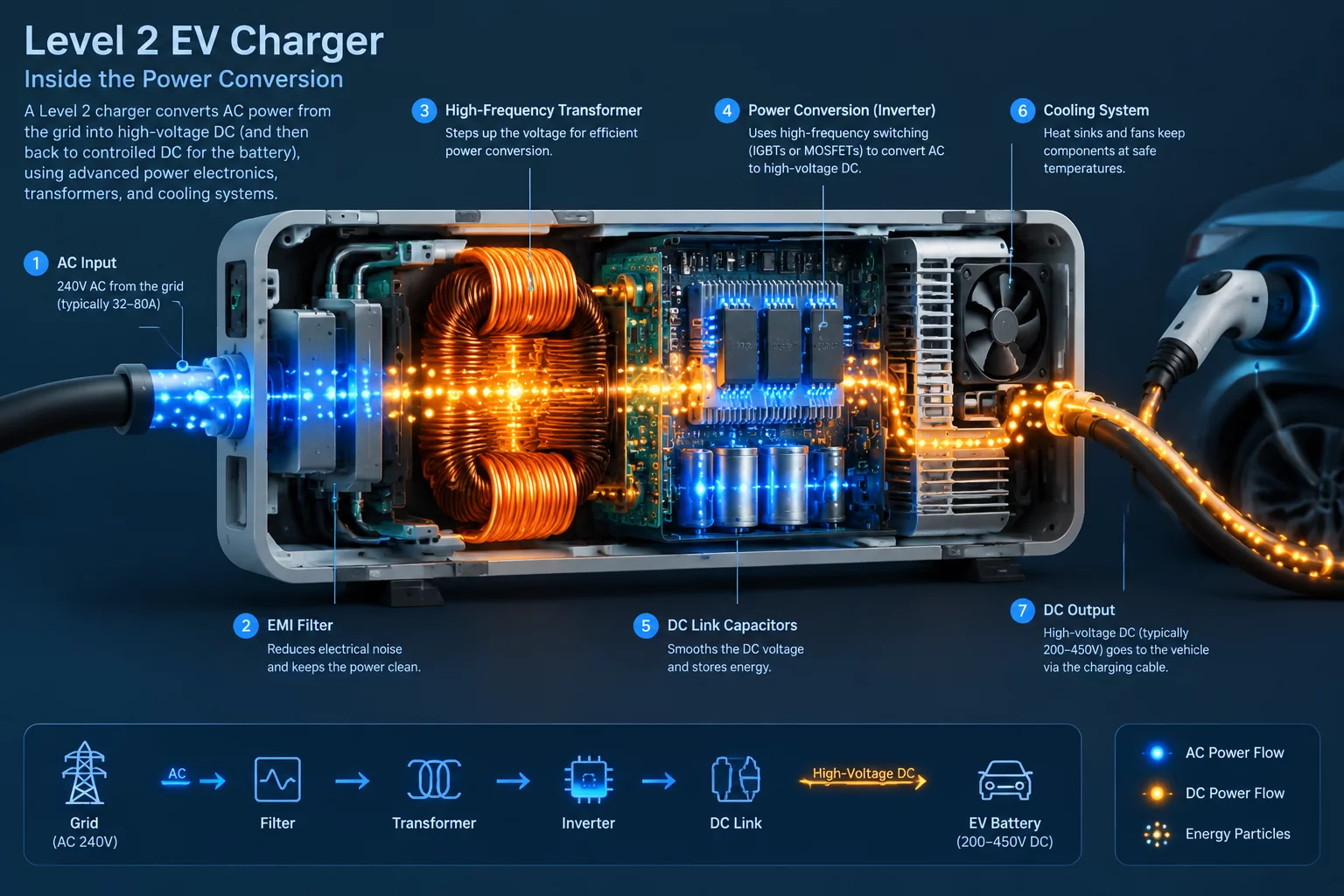
Residential homes constructed prior to the mid-2000s commonly rely on 100-amp or 125-amp service panels. While these panels handle general household lighting, televisions, and basic kitchen appliances without incident, a Level 2 electric vehicle charger introduces a continuous high-amperage load unlike any traditional home equipment. A typical Level 2 wall connector draws between 32 and 48 amperes uninterrupted for hours at a time, commanding nearly half of the entire capacity of an older electrical service.
According to the National Electrical Code, vehicle charging represents a continuous load that must not exceed 80% of any circuit's maximum rating. When combined with central air conditioning, electric clothes dryers, and cooking ranges during hot summer evenings, an undersized service panel faces severe thermal stress. Upgrading to a modern 200-amp panel creates the electrical headroom required to safeguard wiring, prevent nuisance tripping, and deliver dependable charging speeds.
02 Key Takeaways on Service Modernization
Essential Technical and Practical Advantages
- Eliminates panel overheating and unexpected breaker trips caused by simultaneous HVAC, kitchen, and EV power draws.
- Enables full 48-amp charging at 11.5 kW, adding up to 44 miles of driving range per hour connected.
- Ensures strict compliance with local building codes, electrical permits, and homeowner insurance stipulations.
03 Load Calculations and Panel Sizing Parameters
Certified electrical contractors execute comprehensive load calculations under NEC Article 220 before selecting replacement hardware. This process tabulates general square-footage lighting requirements, kitchen branch circuits, motor loads, and continuous vehicle charging at 125% of rated output. When the total calculated demand exceeds eighty percent of the existing panel rating, expanding to a 200A or 400A configuration becomes standard protocol.
A complete upgrade entails replacing exterior meter sockets, running heavier copper or aluminum service entrance conductors, and installing a new distribution cabinet with extensive busbar capacity. Homes constrained by utility feed limitations can incorporate dynamic load management modules. These smart gateways monitor total household power consumption and modulate vehicle charging in real time to avoid exceeding utility thresholds.
04 Core Technical Standards & Engineering Facts
-
1
125% Continuous Load Requirement Branch conductors and overcurrent protective devices must be rated at 125% of continuous load amperage, mandating a 60A breaker for a 48A charging draw.
-
2
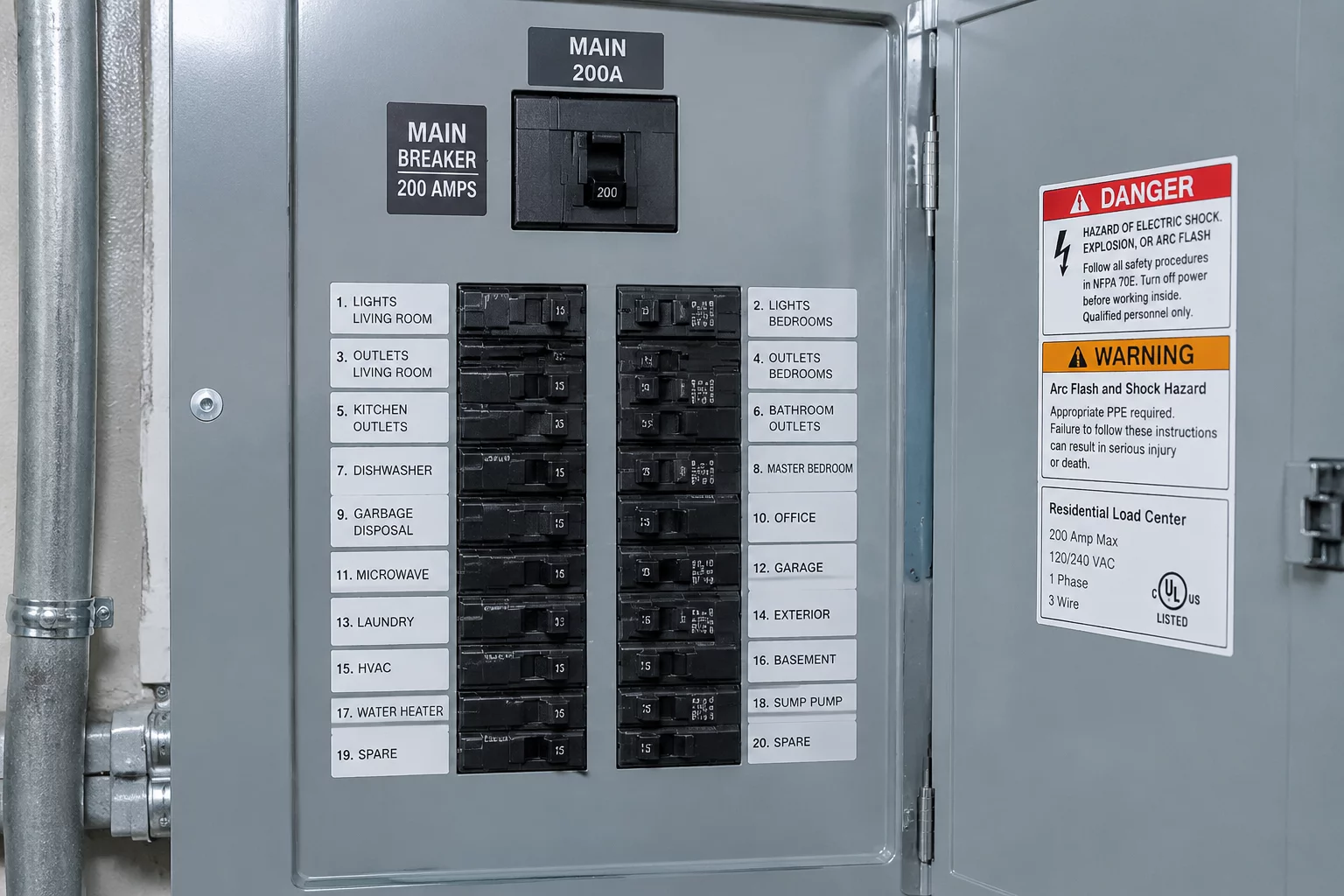
200A Busbar Expansion A standard 200-amp distribution panel provides 40 to 42 full-size breaker spaces, ensuring dedicated space without using split tandem breakers.
-
3
Whole-House Surge Protection Modern codes mandate Type 2 surge protective devices at the primary panel to insulate delicate vehicle electronics against grid power spikes.