01 Operational Principles of 240-Volt Charging
Standard Level 1 charging draws electricity from a regular 120-volt household receptacle, topping out between 1.4 kW and 1.9 kW. While that drip feed can replace thirty miles of local driving during an overnight plug-in, replenishing a contemporary 75 kWh battery requires upwards of forty continuous hours. Level 2 charging transforms that power delivery by using a dedicated 208-volt to 240-volt split-phase supply, the same robust electrical branch that operates electric ovens, heavy heat pumps, and central clothes dryers. This higher potential delivers between 7.2 kW and 11.5 kW directly to the vehicle.
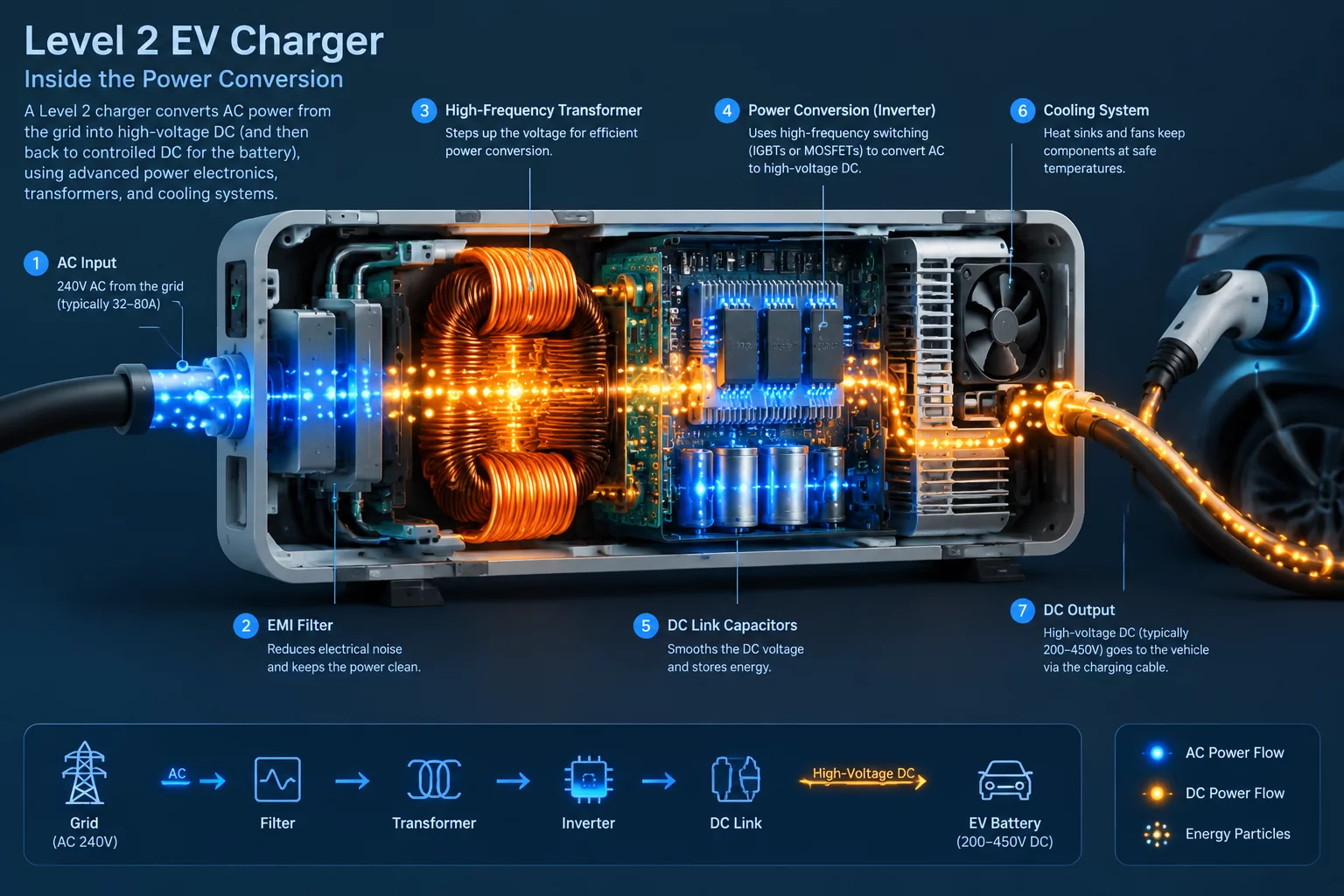
The wall-mounted unit inside your garage—formally known as Electric Vehicle Supply Equipment (EVSE)—does not directly push high-voltage DC electricity into the battery cells. Instead, it serves as a smart communication and protection bridge. The wallbox monitors ground continuity, performs a digital pilot handshake with the onboard vehicle computer, and only closes internal electromagnetic contactors once isolation safety checks pass completely. Once engaged, alternating current flows cleanly into the vehicle onboard inverter, where it transforms into direct current to charge the battery cells.
02 Crucial Takeaways for Home Electrical Safety
Critical Considerations Before Sizing Equipment
- Continuous Load Safety: EV charging constitutes a continuous electrical load under code standards, mandating that circuit breakers and conductors maintain a 125% overhead buffer.
- Onboard Converter Limits: The vehicle internal AC charger governs maximum acceptance speed; a 48-amp supply cannot charge an EV whose onboard converter is rated for only 32 amps.
- Dedicated Circuit Integrity: A Level 2 charging branch must run directly from the breaker panel with zero shared junctions, light circuits, or convenience outlets.
03 Breaker Sizing, Wire Gauge, and Continuous Duty
Standard residential electrical circuits can tolerate brief peaks, but electric vehicles draw massive current continuously for six to ten hours at a time. The National Electrical Code classifies any draw sustained for three hours or longer as a continuous load. Consequently, circuits cannot operate beyond eighty percent of their maximum rating. A charger delivering 40 continuous amps requires a 50-amp dual-pole breaker. Sizing up to an 11.5 kW station pulling 48 continuous amps requires a 60-amp breaker wired with heavy 6 AWG copper conductors to prevent thermal breakdown.
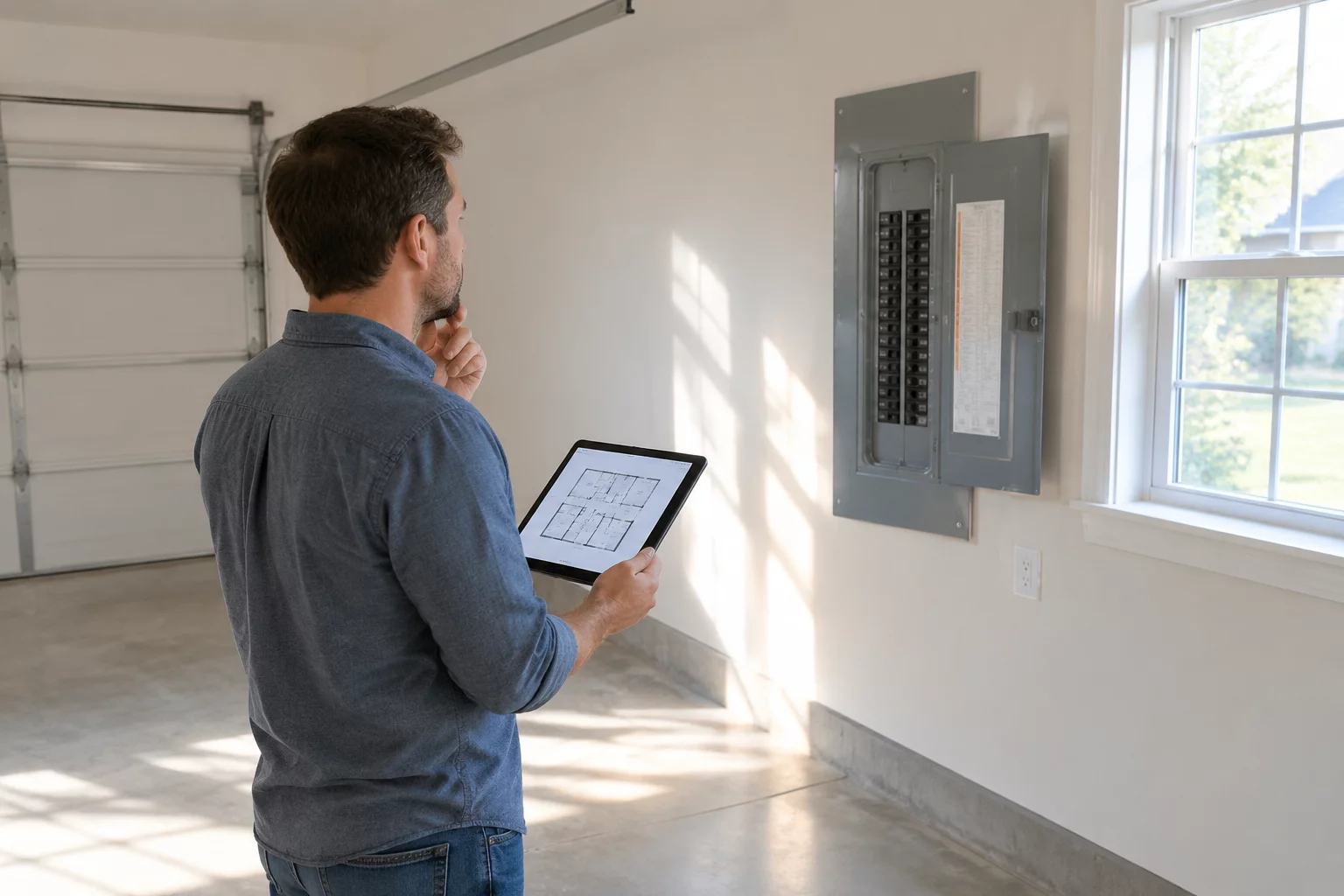
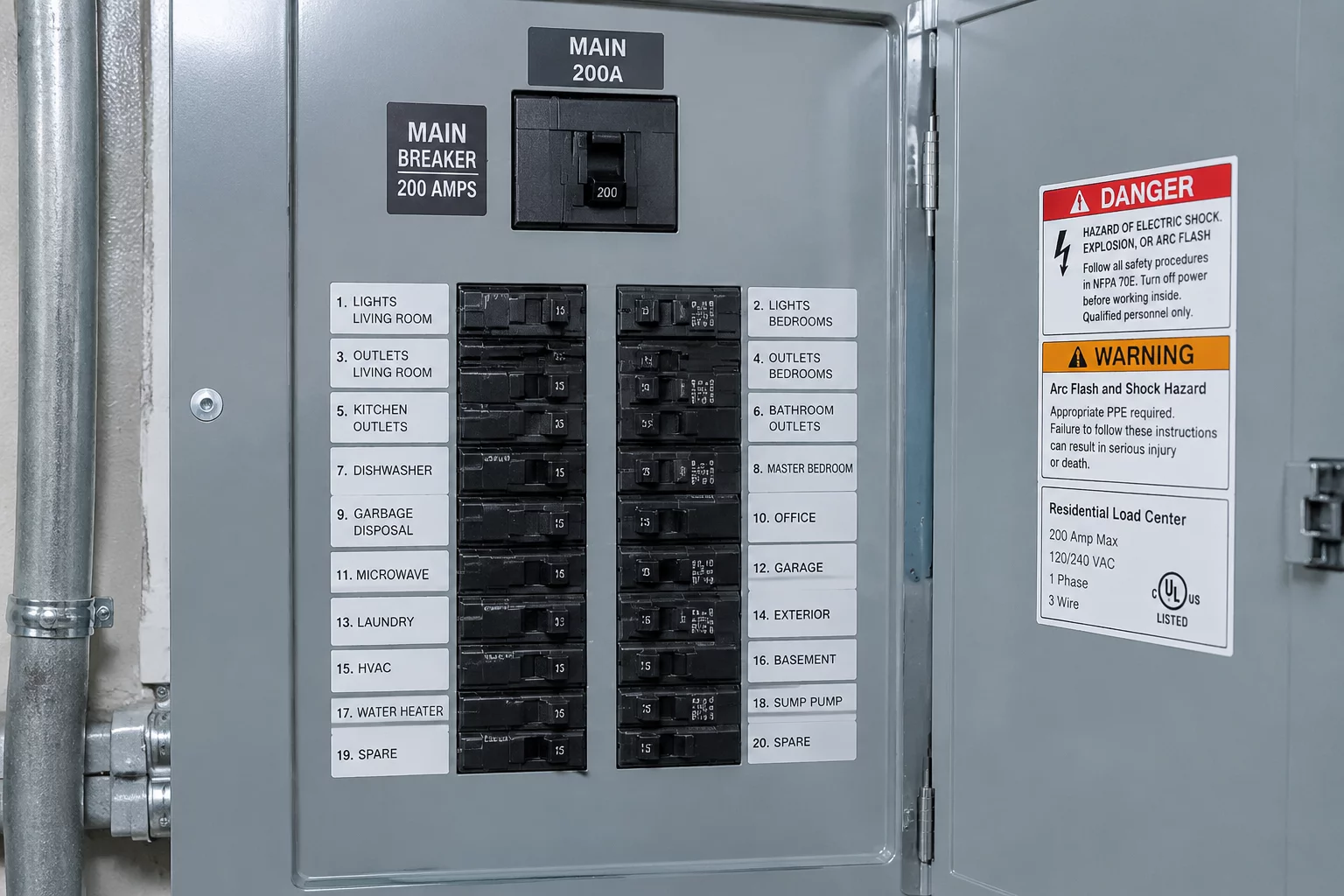
Before installation begins, a licensed specialist performs an electrical load calculation against the home main service panel, typically rated at 100A, 150A, or 200A. If preexisting appliances like induction stoves, water heaters, and dual HVAC units already approach panel capacity, adding an unmanaged 50-amp breaker risks nuisance trips or overloads. In these cases, installing an automated load management device can safely regulate or throttle charging speed whenever household energy usage surges, avoiding an expensive service upgrade.
04 Technical Facts and Hardware Distinctions
-
1
240-Volt Split-Phase Architecture Combining two 120V bus bars in your main panel doubles electrical potential, drastically lowering energy loss through resistance and accelerating charge cycles.
-
2
25 to 45 Miles of Range Replenished Hourly A standard 32A to 48A wall connector fully recovers average daily driving mileage in under ninety minutes, ensuring every morning starts with a full battery.
-
3
Hardwired Connections vs. Receptacle Plugs NEMA 14-50 plug-in units are capped at 40 continuous amps on a 50A breaker, whereas hardwired installations safely unlock full 48-amp charging on a 60A breaker.