01 Essential Electrical Codes & Safety Certifications
Every residential electric vehicle charger connects directly to high-voltage alternating current that runs continuously across multiple hours. In the United States, equipment must comply strictly with National Electrical Code Article 625, governing conductor sizing, disconnect means, ventilation, and automated interlocks. Without certification by a Nationally Recognized Testing Laboratory like Underwriters Laboratories or CSA Group, equipment could lack essential internal safety shutoffs.
Uncertified aftermarket charging cables and gray-market wall units frequently bypass basic thermal throttling protections. If moisture enters the charging coupler or an unexpected voltage surge hits the distribution board, non-compliant equipment fails to isolate the fault. This exposes residential electrical lines to persistent arcing, melted receptacles, and severe fire risks that home insurance policies routinely refuse to cover.
02 Primary Protection Mandates for Home EV Charging
Critical inspection points every homeowner must verify prior to powering an EV charger:
- Ground Fault Circuit Interrupter sensitivity operating with built-in CCID20 automatic circuit interruption to avert severe shock hazards.
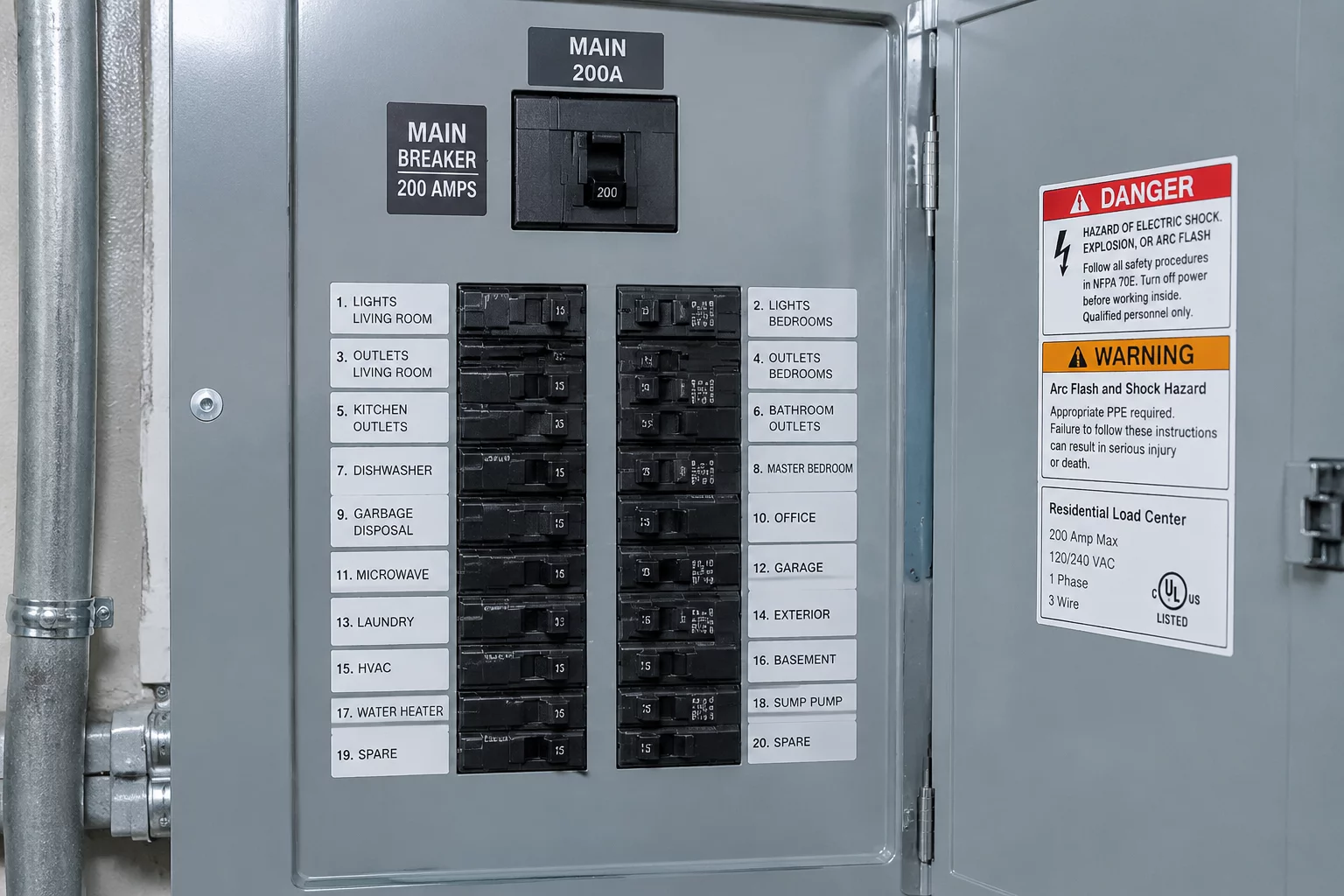
- Continuous duty de-rating fixed at 125% of operating amperage, requiring a dedicated 50-amp circuit breaker for a steady 40-amp load.
- Certified weatherproof enclosures meeting NEMA 3R or NEMA 4 standards to ensure total moisture and dust protection in all seasons.
03 Continuous Duty Rules and Thermal Management
Standard household appliances such as microwave ovens or washing machines operate intermittently across short intervals. In contrast, an electric vehicle charger pulls continuous maximum amperage throughout an entire overnight window. Under electrical safety codes, any continuous load exceeding three hours generates cumulative thermal buildup within the supply lines and panel lugs.
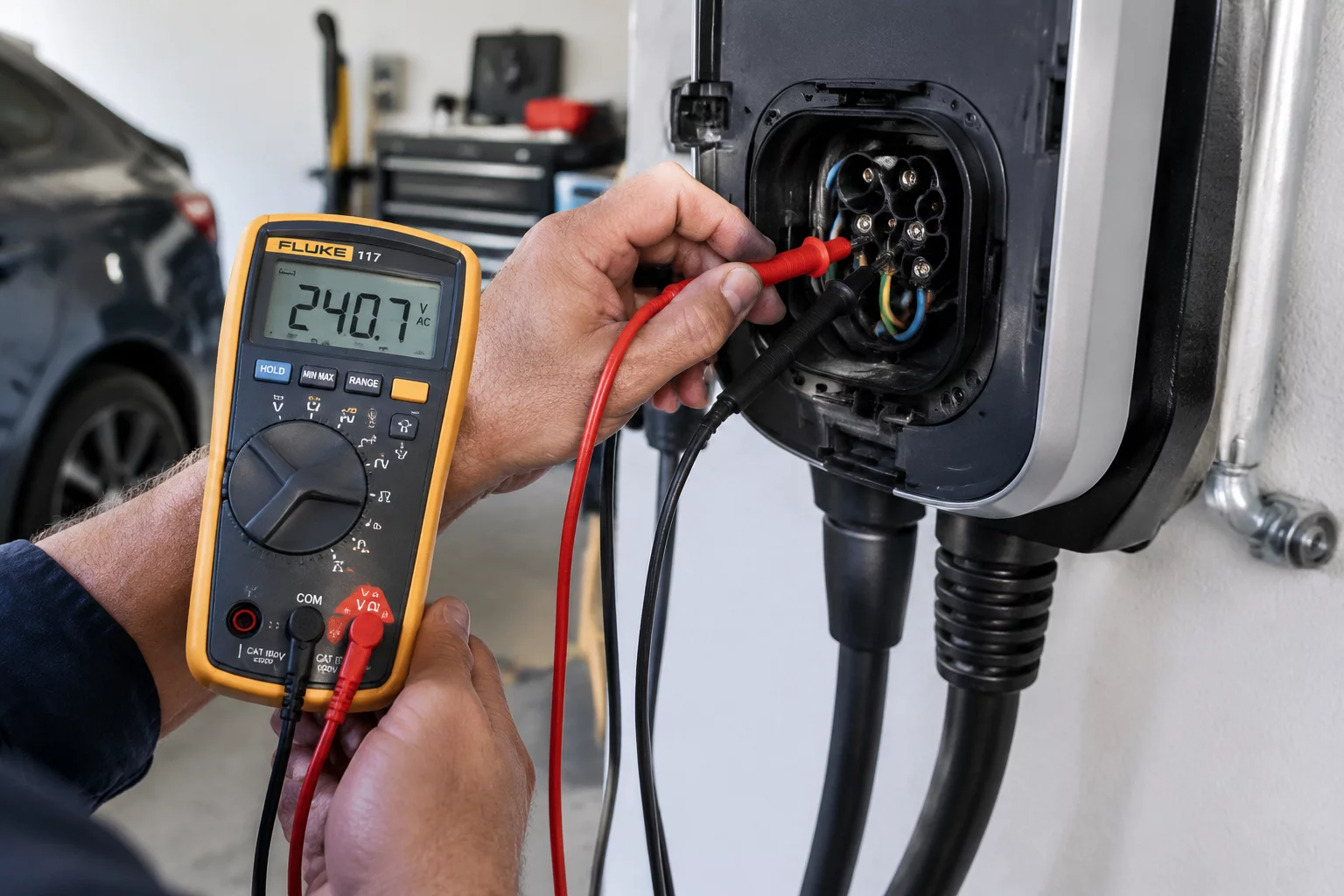
Qualified electrical contractors apply strict conductor gauge sizing to counteract resistive heat buildup. A hardwired 48-amp charging station requires copper wires rated for at least 60 amps, typically 6 AWG THHN conductors housed inside metal conduit. Torque values on every terminal block must be verified using calibrated torque screwdrivers, preventing loose connections that could spark into an electrical fire.
04 Critical Safety Standards Defined by Code
-
1
UL 2594 Standard for EV Supply Equipment Mandates crush resistance on cords, flame-retardant enclosures, and automatic shutoff if the vehicle pilot signal breaks during active charging.
-
2
NEC 625 Continuous Duty 80% Rule Prohibits prolonged energy draw above 80 percent of a breaker's nameplate capacity, requiring dedicated conductors sized for persistent current flows.
-
3
NEMA 4X Environmental Enclosure Standards Guarantees full protection against windblown rain, ice formation, and coastal corrosion, making outdoor driveway charging safe year-round.